By Range
By Product
By Skin Concern
By Ingredients
Ingredients
Ageing
If you've ever looked into anti-ageing skincare, you've probably come across AHAs before. They're the OGs of anti-ageing, with Cleopatra rumoured to have bathed in donkey milk for its beauty benefits, thanks to the AHA content, and they have been used in cosmetics since the 90s1.
Alpha Hydroxy Acids (AHAs) are a family of science-backed anti-ageing ingredients—think glycolic and lactic acids—that gently exfoliate by dissolving the “glue” holding dull, dead skin cells to the surface. Unlike gritty scrubs and other physical exfoliants, AHAs improve skin texture and brighten without the roughness, helping to fade fine lines and wrinkles, upgrade your glow, and even out skin tone (all proven in clinical studies!).
Glycolic acid is found naturally in sugarcane, lactic acid in sour milk, and citric acid of course is abundant in certain fruits, which is where AHAs got the nickname 'fruit acids'. And yep, in case you're wondering, lactic acid is the same stuff that builds up in your muscles after a tough workout—although it's a myth that lactic acid is responsible for the muscle 'burn'.
In skincare, AHAs are fantastic chemical exfoliators, which means they gently unstick the 'glue'—technical term: corneodesmosomes—that holds dead skin cells together on the skin's surface. They do this by supporting the skin's natural process of breaking down the chemical bonds between cells, so the dull, outer layers are whisked away, revealing smoother, fresher-looking skin2.
What are the benefits of chemical exfoliants over physical exfoliants, like microbeads, scrubs or brushes? Well, physical exfoliants rely on friction (rubbing), using physical force to remove dead cells, which can sometimes cause tiny tears, or disrupt the skin barrier3.
Glycolic and lactic acids are both superstar AHAs, but they’re not identical—they each have their own strengths. Glycolic acid is the smallest AHA, which means it dives into your skin quickly and works fast, like a shot of espresso. Lactic acid is a bit bigger and moves more slowly, making it gentler and a little extra hydrating—think of it as a creamy, soothing latte4.
Why does this matter? Glycolic acid can give you speedy, noticeable results, but it can also be more intense. Lactic acid, on the other hand, is perfect if your skin prefers a softer touch. That’s why you’ll often find both blended together in AHA skincare—to balance power and comfort, and give your skin exactly what it needs.
From reducing fine lines and wrinkles, visibly improving dullness and hyperpigmentation, smoothing texture and boosting your skin's glow—AHAs are tiny little multitaskers that work hard to earn their place in your skincare routine.
We mentioned that AHAs are chemical exfoliants, and how they work, but let's dig a little deeper into the actual benefits, and the clinical evidence that backs it up. For starters, AHAs have been shown to improve skin hydration and the appearance of fine lines and wrinkles4. A study from the 90s showed that lactic acid was highly moisturising, boosting skin hydration on the face by around 25% after 6 weeks, while glycolic acid had a more modest effect—14% over the same period. Both acids also significantly improved firmness, skin thickness, and the appearance of wrinkles after 6 weeks4.
But AHAs don't stop there. Another study showed that using an AHA anti-ageing regimen over 12 weeks improved skin roughness by more than 40%, firmness by almost 30%, improved the appearance of fine lines by around 20%, and increased skin elasticity by around 14%5. Not bad for just a few months' work!
And hyperpigmentation? AHAs step up to help there, too. By increasing cell turnover, they disperse pigment that builds up in the outer layers of the skin, leading to a more even skin tone6.
AHAs aren't just for the dermatologist's clinic—almost anyone looking to stay one step ahead of wrinkles, or just wanting to add some life back into their skin, can give them a go. Whether you have normal skin, dry skin, oily or combination skin, AHAs could be for you. However, it pays to be a little cautious in the beginning, especially if you have sensitive skin.
Once you've made up your mind to try AHAs, it's tempting to jump ahead to the highest strength you can find on the shelf. But you wouldn't dump Sriracha on your meal if a mild salsa makes you sweat, would you? It's important to work your way up gently, and it's always a good idea to start by patch testing any new products on a small area of skin first.
Patch testing is a simple, science-backed way to check how your skin reacts to a new product, before you commit to applying it all over your face. To patch test, just dab a small amount of the AHA product onto a discreet area of skin (like behind your ear or on your inner forearm). Wait 24 hours and watch for any signs of redness, itching, or irritation. If your skin stays calm, you’re good to go. If not, it’s a sign your skin might need a gentler approach or a different formula—a dermatologist can help you there, if you’re concerned.
For sensitive skin, patch testing is especially important. This extra step can help you avoid unwanted irritation and find the AHA routine that brings out your best skin, not your most sensitive side. Just know that a bit of skin tingling in the beginning is completely normal and expected.
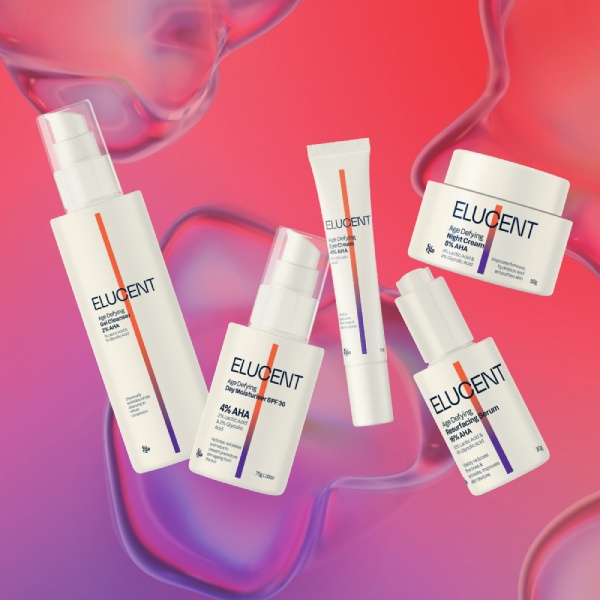
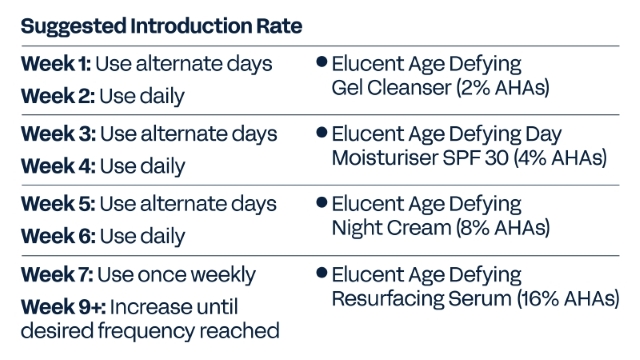
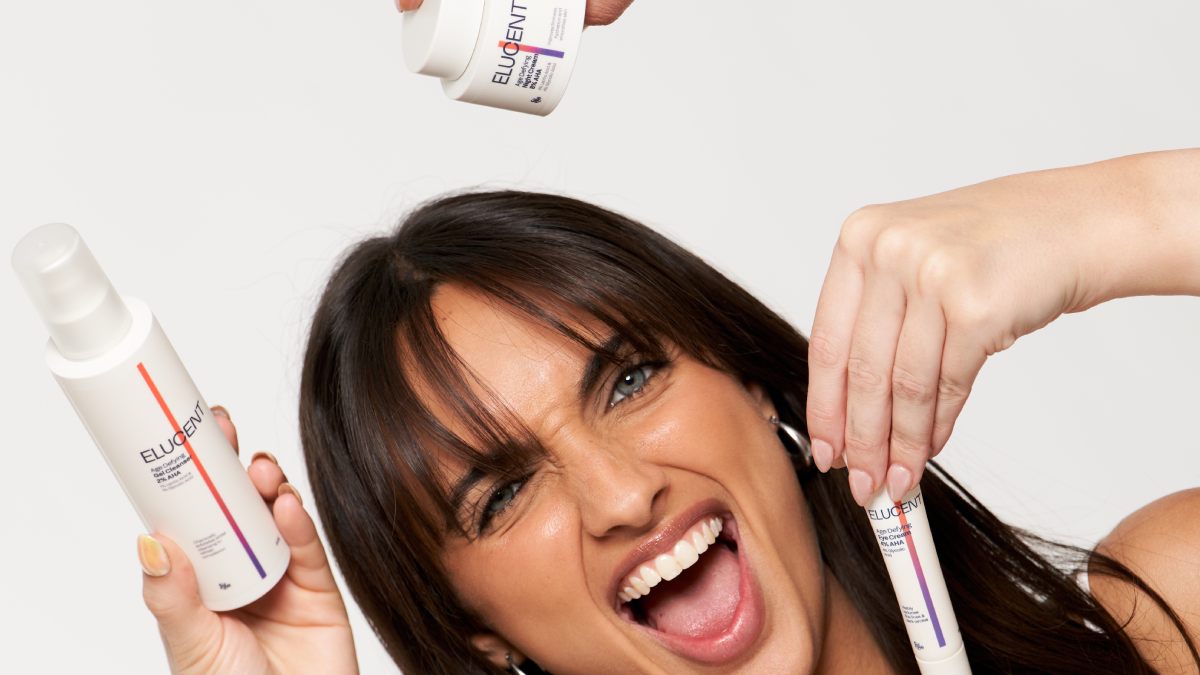
Step 1: Start with a low AHA cleanser, like Elucent Age Defying Gel Cleanser (with 2% AHAs). Because cleansers don't stay on the skin for long, they're a great way to introduce your skin to AHAs.
Step 2: After a couple of weeks, or when your skin no longer tingles from the AHA cleanser, add a mid-strength day cream, such as our Elucent Age Defying Day Moisturiser SPF 30*, or an eye cream, like Elucent Age Defying Eye Cream (with 4% AHAs) after cleansing.
Step 3: Continue to step up gradually in strength every couple of weeks until you reach the level that's right for your skin. Try introducing a night cream, like Elucent Age Defying Night Cream (with 8% AHAs) to visibly rejuvenate skin while you sleep.
Step 4: Always include a high SPF daily sunscreen in your routine, such as our Elucent Age Defying Day Moisturiser SPF 30*, since AHAs can make your skin an easier target for sun damage.
Bonus Tip: Apply AHA moisturisers and serums to dry skin (not wet or damp) to reduce the chance of stinging.
* Always read the label and follow the directions for use. Avoid prolonged sun exposure and wear protective clothing, hats and eyewear to further reduce risk. Frequent re-application is required.
AHAs may not be the newest kids on the block—in fact, with use dating back to Cleopatra, one of the original beauty influencers, they're certified ancient. But glycolic and lactic acids are backed up by modern science and clinical trials, showing that they still punch far above their weight (and their price point!) when it comes to reducing visibly fine lines and wrinkles, clearing uneven skin tone, and visibly improving elasticity, firmness, and hydration.
Ready to jump in? Start with a gentle AHA cleanser or low-strength cream, patch test first, and let your skin guide you as you build up to stronger formulas. With a little patience and the right routine, you’ll see why AHAs have stood the test of time—because smooth, glowing, youthful-looking skin never goes out of style.
Anti-ageing day moisturiser with SPF30 to smooth, protect and hydrate skin
8% AHA night cream to visibly firm, smooth and revitalise ageing skin
16% AHA-powered serum to smooth, firm, and visibly renew ageing skin
Want glow without the drama? Here’s your simple, friendly guide to using AHAs the right way—what to use, when, and how to keep your skin calm and happy.
Fine lines and wrinkles? You’re not alone. Learn the facts about how skin ages and the best anti-ageing skincare tips that actually help.
Exfoliation = glow. Here’s how AHAs, hyaluronic acid and more can gently smooth, hydrate and perk up your face without making your skin cranky.
1. Brody HJ, Monheit GD, Resnik SS, Alt TH. A history of chemical peeling. Dermatol Surg 2000;26(5):405.
2. Karwal K, Mukovozov I. Topical AHA in dermatology: Formulations, mechanisms of action, efficacy, and future perspectives. Cosmetics 2023;10(5):131.
3. The A, B and Ps of exfoliation for sensitive skin [Internet]. Aust. J. Pharm.2025 [cited 2025 Aug 22];Available from: https://ajp.com.au/lessons/the-a-b-and-ps-of-exfoliation-for-sensitive-skin/.
4. Smith W. Comparative effectiveness of α-hydroxy acids on skin properties. Int J Cosmet Sci 1996;18:75–83.
5. Edison B, Green B, Wildnauer R, Sigler M. A polyhydroxy acid skin care regimen provides antiaging effects comparable to an alpha-hydroxyacid regimen. Cutis 2004;73:14–7.
6. Usuki A, Ohashi A, Sato H, Ochiai Y, Ichihashi M, Funasaka Y. The inhibitory effect of glycolic acid and lactic acid on melanin synthesis in melanoma cells. Exp Dermatol 2003;12:43–50.